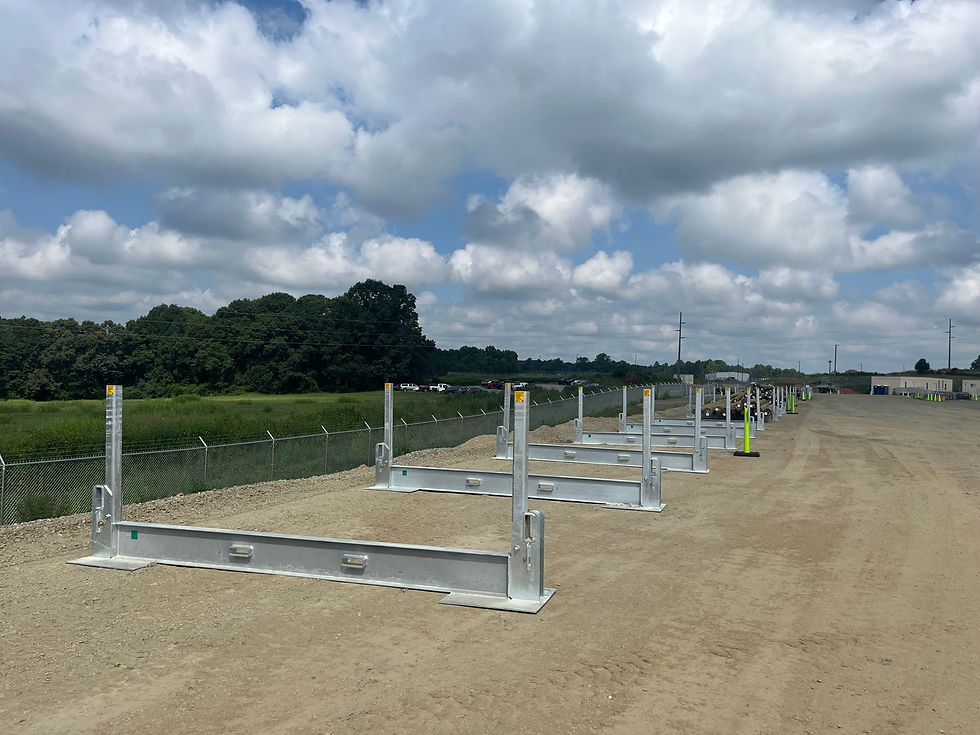
Utility Pole Storage Solutions for Wood, Concrete, Steel, and Ductile Iron Poles
Not every utility pole is made the same, and neither are the storage requirements that come with managing them.
Electric utilities and contractors frequently handle a combination of wood, concrete, steel, and ductile iron poles across their operations.
Each material presents different considerations for transportation, handling, and storage.
An effective utility pole storage system should account for these differences while maintaining a consistent approach to organization and accessibility.

Utility Pole Storage Solutions for Different Pole Types
While every utility pole material has unique characteristics, the overall goal remains the same: safe, organized, and accessible storage.
Selecting the right storage solution requires understanding each material's weight, dimensions, handling requirements, and manufacturer recommendations.
Wood Utility Pole Storage
Wood utility poles remain widely used across electrical distribution and transmission systems.
Their varying lengths, classes, and diameters make organized storage important for inventory identification and retrieval.
Dedicated utility pole racks can help establish defined storage locations while keeping materials accessible to loading equipment.
Organizing wood poles by length, class, or project can also simplify material selection for outgoing deliveries.
Concrete Utility Pole Storage
Concrete poles introduce different considerations because of their weight, shape, and handling requirements.
Storage configurations must account for appropriate support locations, loading limits, and the manufacturer's handling recommendations.
Separating concrete poles from other material groups can help operators maintain clear inventory locations and select suitable handling equipment.
A properly planned storage arrangement supports organized material containment and access.
Steel Utility Pole Storage
Steel utility poles may arrive in different lengths, diameters, and configurations depending on the application.
Their size and weight can influence equipment selection, storage placement, and retrieval procedures.
Organized steel pole storage helps material managers establish dedicated locations for specific pole types.
For facilities receiving frequent deliveries, an effective rack layout can make it easier to coordinate storage and outbound transportation.
Ductile Iron Pole Storage
Ductile iron utility poles require similar attention to material dimensions, weight, support requirements, and handling practices.
As with other engineered pole materials, storage methods must follow the applicable manufacturer recommendations.
Keeping ductile iron poles clearly identified and separated by project or specification can help maintain accurate inventories and improve material accessibility.
One Organized Approach to Utility Pole Storage
Although pole materials differ, the overall goals of storage remain consistent: maintain organization, provide appropriate containment, and support efficient movement through the yard.
Blackwood Safety Racks are designed for utility material storage applications, including wood, concrete, and steel poles, with additional material applications evaluated according to equipment specifications.
Before selecting a loading configuration, review the Safety Rack guidelines and user manuals and confirm the applicable requirements for each pole type.
The storage system is also only one part of the operation. Blackwood Solutions' utility pole transportation servicessupport the movement and delivery of utility poles to facilities and project locations.
Find a Storage Solution for Your Utility Materials
Whether managing a permanent utility pole storage yard or a temporary project location, selecting suitable storage equipment is essential to an organized operation.
Contact Blackwood Safety Racks to discuss your pole types, inventory requirements, and available storage options.